If you’re a busy entrepreneur who feels stiff getting out of the car, tight during your golf swing, or sore after long workdays, you’re not alone.
High-performing professionals often spend hours sitting, traveling, or working at a desk. Over time, that lifestyle reduces mobility, limits rotation, and creates the “tight and locked up” feeling that affects both daily comfort and sports performance.
The good news? Improving mobility and range of motion doesn’t require hours in the gym. It requires the right strategy.
This guide answers the most common questions busy professionals ask about stiffness, flexibility, assisted stretching, and deep tissue release — and what actually works.
Why Do Entrepreneurs Feel So Stiff?
Stiffness is rarely about "not stretching enough." It’s usually a combination of:
Prolonged sitting and travel
High stress levels
Limited spinal rotation
Reduced hip mobility
Poor thoracic extension
Old injuries that were never fully restored
For golfers and active adults, the biggest restrictions are often found in:
Hips
Thoracic spine (mid-back)
Shoulders
Hamstrings
When those areas lose mobility, you may notice:
Shortened golf backswing
Loss of power and club speed
Low back tightness after playing
Neck and shoulder tension
Feeling "older" than you should
What Are Busy Professionals Searching For?
When entrepreneurs look for help, they rarely search "physical therapy."
They search for things like:
"How to improve hip mobility for golf"
"Why am I so stiff all the time?"
"Best stretches for tight hips and back"
"Deep tissue release near me"
"Assisted stretching benefits"
"How to increase range of motion fast"
"Mobility program for busy professionals"
If you’re searching these phrases, you’re likely looking for efficient, results-driven care — not a generic exercise sheet.
What Actually Improves Mobility and Range of Motion?
Improving mobility requires three key components:
1. Targeted Manual Therapy (Deep Tissue & Joint Work)
Hands-on treatment helps:
Reduce muscle guarding
Improve tissue glide
Restore joint motion
Decrease protective tightness
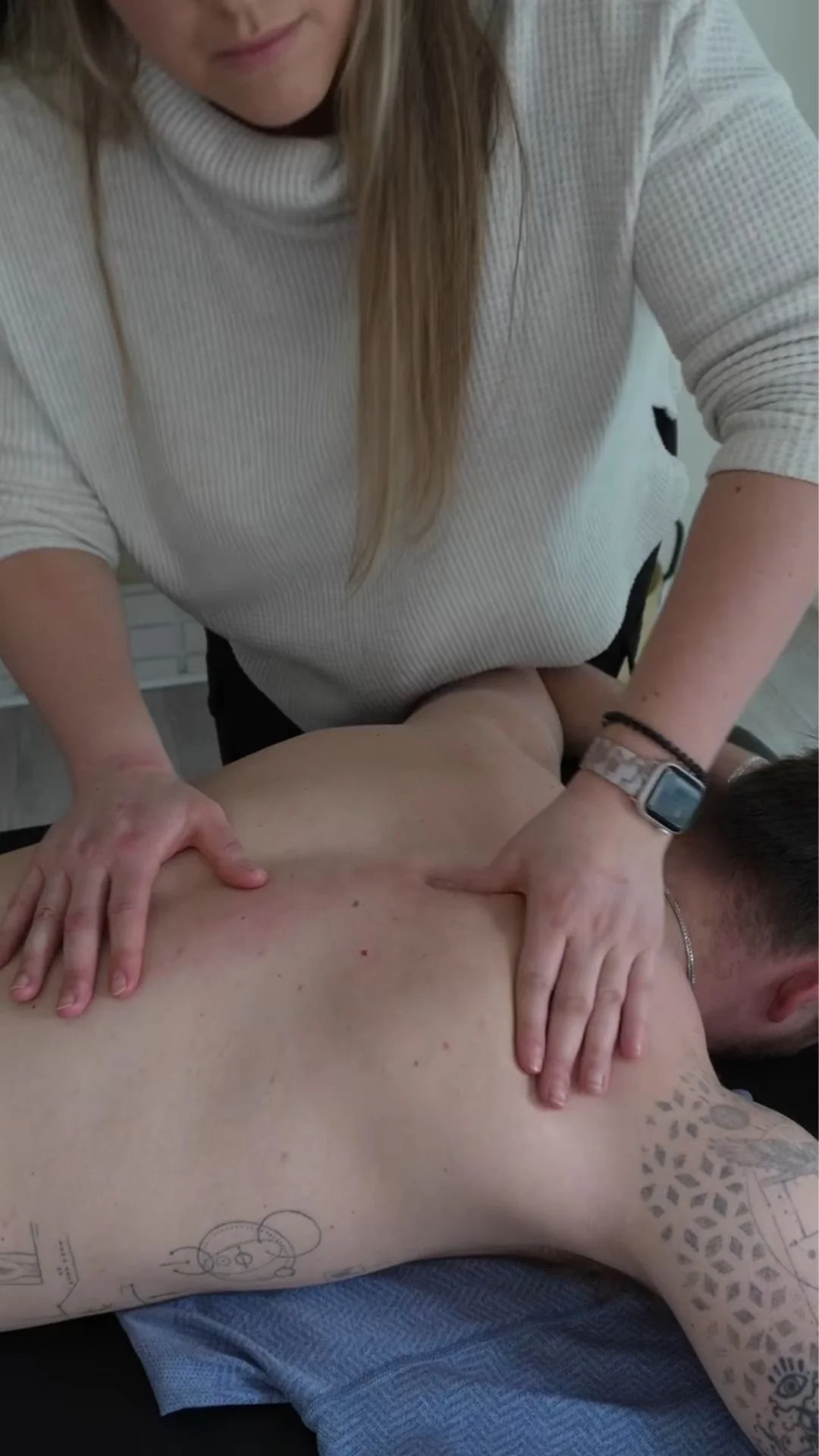
Deep tissue release is not just about pressure — it’s about restoring movement where restriction lives.
2. Assisted Stretching
Assisted stretching allows a trained provider to:
Stabilize the body properly
Isolate restricted segments
Access deeper rotational patterns
Achieve ranges difficult to reach alone
For golfers, assisted rotational stretching of the hips and thoracic spine can significantly improve backswing and follow-through mechanics.
3. Strategic Strength to Lock It In
Mobility without control doesn’t last.
The right program includes:
Rotational core strength
Glute activation
Scapular stability
Anti-rotation control drills
This ensures the new range of motion is usable and sustainable.
Assisted Stretching vs. Doing It Yourself: What’s the Difference?
Self-stretching works well for maintenance.
Assisted stretching and manual therapy are ideal when:
You’ve plateaued
You feel chronically tight
You don’t know where the restriction is coming from
You want faster results
You value efficiency over trial-and-error
Busy entrepreneurs often prefer professional guidance because it saves time and delivers measurable progress.
How Long Does It Take to Improve Flexibility for Golf?
Most high-performing adults notice:
Reduced stiffness within 1–2 sessions
Improved rotation in 2–4 weeks
Better power and comfort in 4–6 weeks
Consistency matters more than intensity.
For time-constrained professionals, a focused mobility session once weekly paired with brief home work (10–15 minutes) is often enough.
Is Deep Tissue Release Worth It for Golfers?
Yes — when combined with mobility and strength work.
Deep tissue release alone may temporarily reduce tightness. But when paired with corrective mobility training, it can:
Increase swing rotation
Reduce low back strain
Improve hip loading
Enhance overall fluidity
The goal isn’t just to feel looser — it’s to move better.
Who Benefits Most from Mobility-Focused Physical Therapy?
Mobility-based care is ideal for:
Entrepreneurs who sit 6+ hours daily
Golfers wanting more rotation and power
Professionals who travel frequently
Adults 35+ are noticing stiffness increasing
High performers who want preventive care
If you value efficiency, privacy, and results, personalized mobility sessions often outperform generic group classes or random YouTube routines.
What Makes a Mobility Program Effective?
An effective program should include:
Movement assessment
Targeted manual therapy
Assisted stretching
Rotational strength work
Clear progression plan
Without assessment, stretching becomes guesswork.